


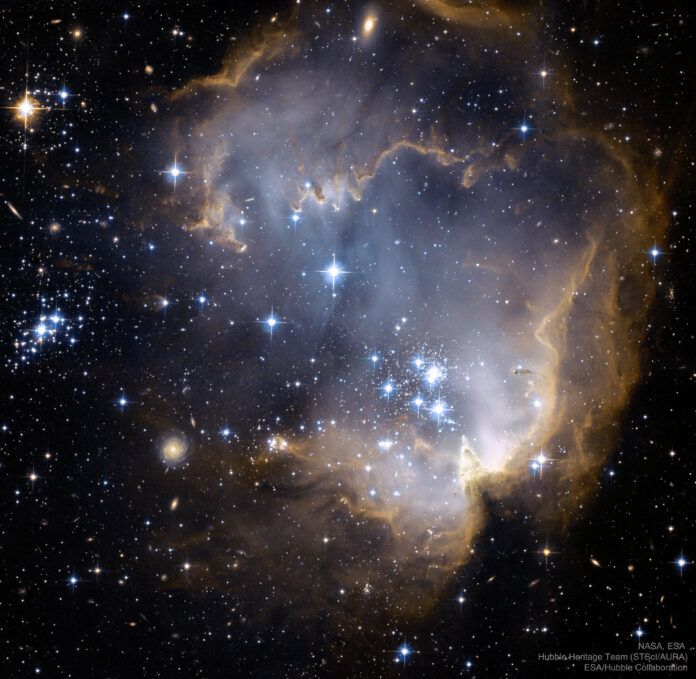
Every day, NASA reveals a fresh window into the cosmos — and this Thursday, that window opens on something truly spectacular. The Astronomy Picture of the Day for April 9, 2026 is NGC 602 and Beyond, and it may just stop you in your tracks.
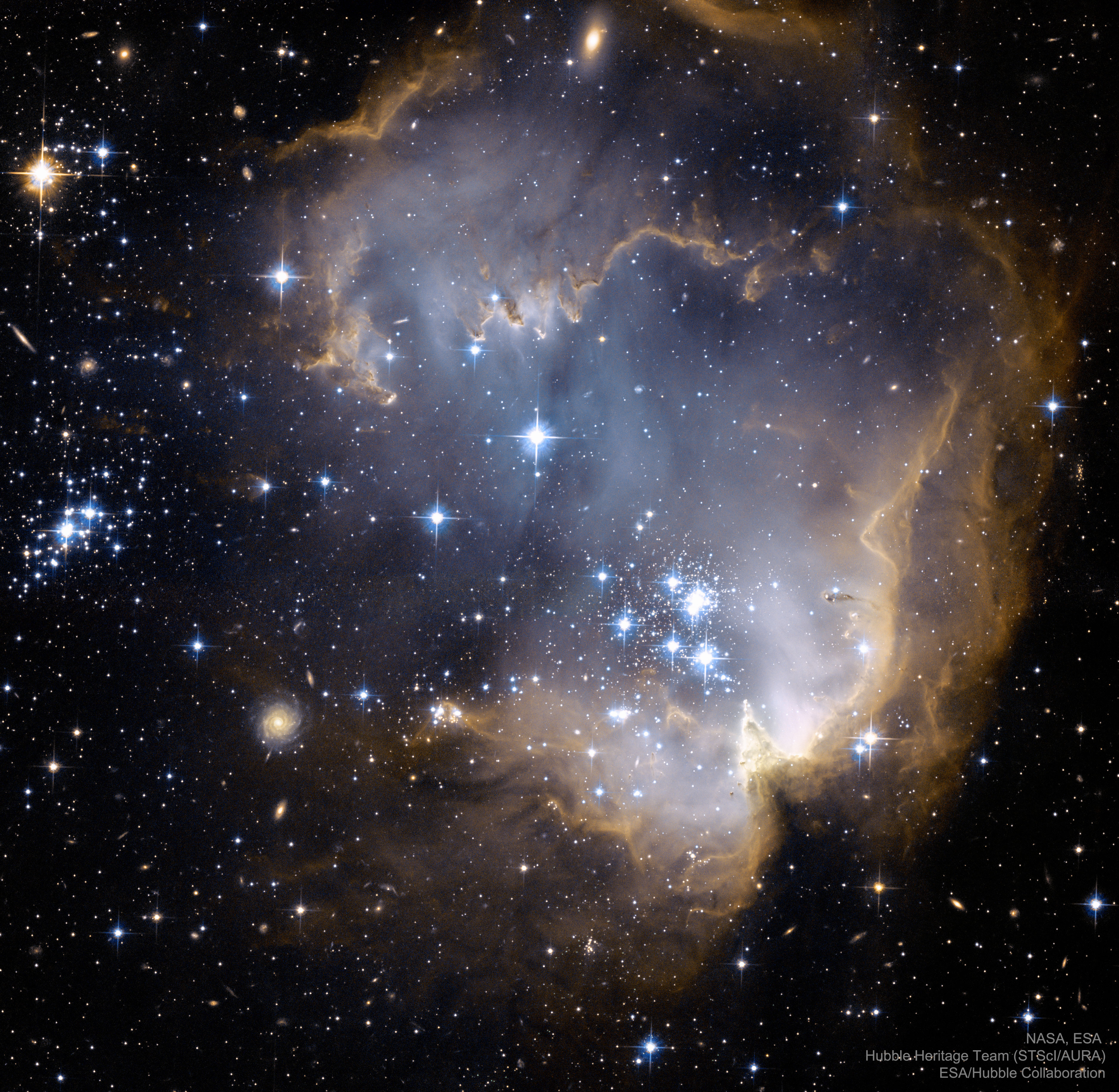
Image Credit & Copyright: | Source: apod.nasa.gov
What Are We Looking At?
The clouds may look like an oyster, and the stars like pearls, but look beyond. Near the outskirts of the
Small Magellanic Cloud,
a satellite galaxy some 200 thousand light-years distant,
lies 5 million year young star cluster
NGC 602. Surrounded by natal gas and dust,
NGC 602 is featured in this
stunning Hubble image of the region. This image comes courtesy of NASA, selected as the Astronomy Picture of the Day for April 9, 2026.
Fantastic ridges and swept
back shapes strongly suggest that
energetic radiation and shock waves from
NGC 602's
massive young stars have eroded the
dusty material
and triggered a progression of
star formation moving away from the cluster's center. At the estimated distance of the
Small Magellanic Cloud,
the featured picture spans about 200 light-years, but
a tantalizing assortment of background galaxies are also visible in
this sharp
multi-colored view. The background galaxies are hundreds of
millions of
light-years or more
beyond NGC 602.
Space photography has never been more accessible. How To Know You Are Hiring… shows how modern telescopes are changing the way we understand deep space.
The Science Behind NGC 602 and Beyond
Every image NASA selects for its Astronomy Picture of the Day represents the cutting edge of observational astronomy. The colors, structures, and details visible in this image carry information about temperature, chemical composition, distance, and motion — each one a clue that helps astronomers map the universe.
Modern space observatories — including NASA’s Hubble Space Telescope and the ESA/Hubble image archive — routinely capture imagery that makes the invisible visible. Ultraviolet light, X-rays, infrared radiation: each wavelength tells a different story about the same object.
If you enjoy images like this one, Tips for proper measurement of kratom… is a great place to explore more fascinating space discoveries covered right here on CCDiscovery.
About the NASA Astronomy Picture of the Day Program
The Astronomy Picture of the Day has been published without interruption since June 16, 1995 — making it one of the longest-running daily features on the internet. Founded by astronomers Robert Nemiroff (Michigan Tech) and Jerry Bonnell (University of Maryland), the APOD program publishes one new image every 24 hours, each accompanied by an explanation written by a professional astronomer.
Over its lifetime, NASA APOD has showcased thousands of images — from the craters of the Moon to galaxies billions of light-years away. For April 2026, the program continues to bring the wonders of the cosmos to millions of readers around the world, completely free.
Key Facts About This Image
- NASA APOD Title: NGC 602 and Beyond
- Date Featured: April 9, 2026
- Image Credit:
- Media Type: Image
- Source: NASA Astronomy Picture of the Day — apod.nasa.gov
Frequently Asked Questions
What is the Astronomy Picture of the Day for Apr 9, 2026?
The NASA Astronomy Picture of the Day for April 9, 2026 is NGC 602 and Beyond. The clouds may look like an oyster, and the stars like pearls, but look beyond.
What is NASA's Astronomy Picture of the Day (APOD) program?
NASA’s Astronomy Picture of the Day (APOD) is a daily program that has published one new space image every 24 hours since June 16, 1995. Each image comes with an explanation written by a professional astronomer at NASA’s Goddard Space Flight Center.
Who took the APOD image for April 9, 2026?
The image featured as the Astronomy Picture of the Day for April 9, 2026 — NGC 602 and Beyond — is credited to . NASA curates these images from both professional space observatories and talented astrophotographers around the world.
Can I download and use NASA Astronomy Picture of the Day images?
Most NASA images are in the public domain, but some APOD images are copyrighted by the individual photographer or organization. Always check the specific copyright credit listed with each image. This image is credited to .
Where can I see the full archive of NASA APOD images?
The complete archive of all Astronomy Picture of the Day images since 1995 is available at apod.nasa.gov/apod/archivepix.html. You can also follow CCDiscovery.com for a detailed daily article on each new APOD image.